

The OpenSIPS Bootcamp is a formidable tool for learning OpenSIPS:
- 18 years, 36 editions
- More than 360 engineers trained, in over 24 countries.
- online and in-class
But since day one, the major challenge was to decide the content of training. Here we have the clash between the complexity of topics we cover and how many topics we can cover in the training.
If we increase the complexity of the approached topics, the number of topics becoming available is so high that we will need at least 4 months of training to cover them all. And if we start selecting which advanced training are to be covered by the training, for sure we will not be able to make all attendees happy – some are more focus on IMS, some other is special routing (like SBC), others on security and so on.
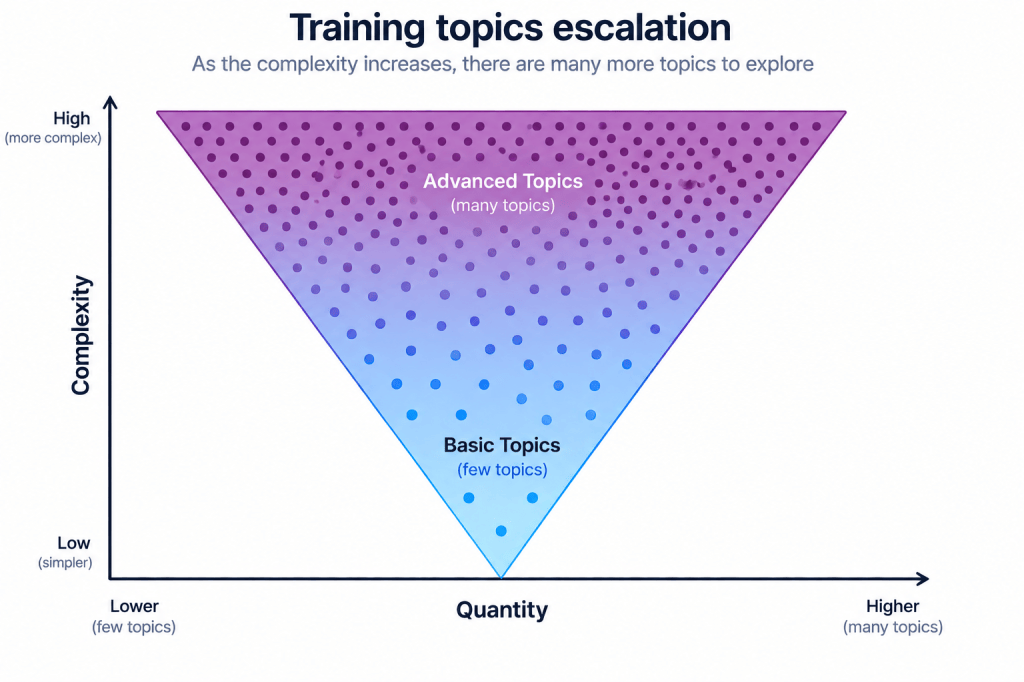
Bottom line, the time constraints of the Bootcamp training does not permit us to fairly include advanced topics.
The new OpenSIPS training structure
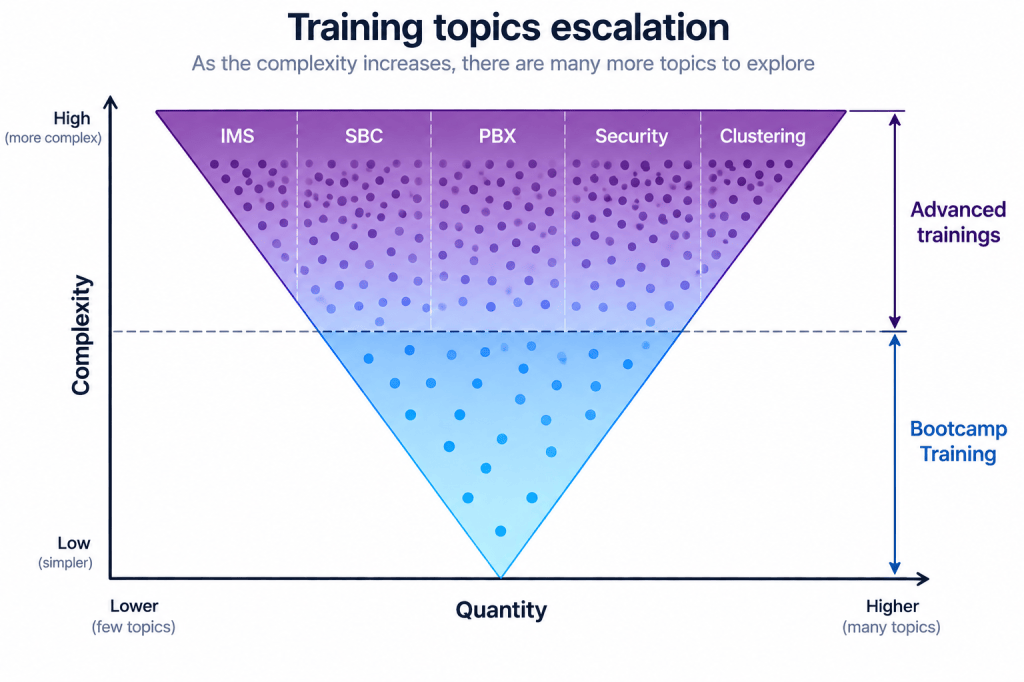
The solution? The horizontal scaling with multiple trainings:
- keep the Bootcamp to focus on the Basic Topics
- add multiple Advanced Trainings, each focused on a certain topic
OpenSIPS Bootcamp
The Bootcamp training will stay almost the same, online, with small adjustments.
Important changes:
- reduced from 40 to 32 hours – 4 hours per day, 8 days, 2 weeks; the Fridays will be free for the students to catch up or practice.
- the Advanced Topics were removed, namely Advanced Calling Flows (PBX) and Clustering Support.
- new topics added as Security (TLS, WSS), Observability, Media Handling (relaying, bridging, transcoding)
- the Certification Exam is included in the training cost, even if optional to the students
The new format, with all the details on the content are available on the OpenSIPS Bootcamp official web page.
HEADS UP, a new training session starts on 30th of Nov 2026, based on OpenSIPS 4.0 .
Advanced Trainings
The Advanced Training will focus on a single advanced topic. Students may individually register to any of these trainings.
The important aspects of the Advanced Trainings:
- address only one advanced topic
- same 50% theory and 50% practice
- online, 6 hours in a single day
- run in Digital Cloud, with extra infrastructure provided
- they require basic/medium OpenSIPS skills; doing the Bootcamp will fulfill this;
We are currently working on these trainings and have them announced when available.
The targets are:
- OpenSIPS SBC with MSTeams
- Building an IMS platform with OpenSIPS
- High Availability and Scaling with OpenSIPS Clustering
- AI Voice Agents with OpenSIPS
- Advanced OpenSIPS Troubleshooting
More topics are on the list, to be added in time, but for now these are the part of the first 2 waves (starting 2027 most probably)
OpenSIPS Certification
The Certification exam is also refurbished. It is more focused on the student’s understanding the OpenSIPS configuration, rather than their ability to “produce” configuration scripts.
The exam is part of the Bootcamp training – it is cost included into the training. Students may take – it is optional – this exam at the end of the Bootcamp training.
The training consists in building an OpenSIPS script, according to the requirements provided by the trainings. The student have 1.5 hours to build it – any docs may be used in the process. After that 30 minutes are allocated for the student to present his work to the trainer and to ask trainers questions about his work.
Get trained
Register now for the upcoming OpenSIPS Bootcamp training session on 30th of Nov 2026, based on OpenSIPS 4.0 .
And stay tuned for the announcements on the Advanced Trainings. Follow OpenSIPS here, on social media or mailing lists.


